Monday, October 3, 2016

Mistakes are the Portals of Discovery

Mistakes are the Portals of Discovery
--James Joyce

Image result for portal


I found this quote last summer when I was thinking about and preparing lessons for the first week of school. I knew that I wanted to spend some time talking about growth mindset with my students and emphasize the value of mistakes in the learning process. I don't want my students to be afraid of making mistakes. Instead, I want them to take risks and celebrate mistakes and use them as opportunities to learn new things. I love the words portal and discovery in this quote. The definition of portal is "a doorway, gate, or other entrance, especially a large and elaborate one."  I love the idea of my students passing through a portal and discovering new knowledge and insight by making mistakes.

I liked this quote so much that I decided to finally become a bona fide teacher and order my first gross of custom printed pencils:


I had to change the quote slightly because 36 characters and spaces are the maximum allowed on a custom printed pencil from ForTeachersOnly. I also ordered some brain erasers to give out with the pencils throughout the year to recognize students who learn from mistakes and exhibit a growth mindset.


In class, after we talked about the differences between fixed and growth mindsets, students wrote growth mindset quotes and statements on lightbulbs, speech bubbles, neon starbursts and thought bubbles to decorate a mural with our classroom slogan.


Our Classroom Mural:


Tuesday, August 16, 2016

Rate Exploration Activity

It was the first day back after the holiday break and I wanted to plan something active for my students to do. We were in the middle of the chapter on rates and so I was looking for an activity where student timed themselves doing different activities and then converted these rates to different time periods. I found this activity on NCTM Illuminations:  What's Your Rate?
Other than that, I wasn't able to find much online. I decided to take the worksheet from NCTM Illuminations and add a few more activities and add some more challenging conversion questions.
Here is what I came up with:

Available here:


As I worked on the tasks and questions for this activity, I realized that this would be an excellent anchor tasks to introduce the concept of rates. In the past I have used a YouTube video called the The World's Fastest Everything - 2013. The students really enjoy the video, but I think they will get more out of this activity. Students have an intuitive sense of rates and I think it is important to tap into their prior knowledge about rates by exploring activities they have experience with. I love how this activity makes it clear that two things are being measured simultaneously and that those two things together create a rate. I really enjoyed reading this blog posts about rates (What I think a rate is now  from f(t).

Wednesday, August 3, 2016

Look What I Found at Dollar Tree!

I found these 3-D Geometric Shapes at Dollar Tree yesterday! I plan to use them during the first week of school to have students create a growth mindset classroom display!  I will give each student a face to color and write a growth message on!


Dodecahedron:  12 faces (pentagons)
Icosahedron:  20 faces (triangles)
Rhombicuboctahedron has:  26 faces (8 triangles and 18 squares)
Small Stellated Dodecahedron:  60 faces (triangles)

Tuesday, July 5, 2016

Coordinate Plane Graphing Pictures Hallway Display

One of the teachers I most admire gave me some advice when I was a new teacher. I asked him what is the most important thing a teacher can do to be effective and he said that he gets the best work and most significant learning from his students when he asks them to create something that they will share with other people.

After learning about negative numbers, my students were ready to learn how to graph ordered pairs in all four quadrants of the Coordinate Plane. After some practice with this skill, I gave the students a list of designs they could create on large pieces of graph paper by graphing points and connecting the dots. I got permission to hang them in the hallway leading into the library media center which allowed all the students and staff in the building to see their work. I think the students learned more about graphing points knowing the final product would be on public display. They worked harder on the designs, found and corrected any points that were graphed incorrectly, and worked collaboratively in small groups to create designs that they were proud to display for the whole school to see.


Many of the pictures came from graphing instructions available on Mr. Colli's website.
This is the best deal I have found for large graph paper with grid lines on Amazon (TOPS Standard Easel Pads, 3-Hold Punched, 27 x 34 Inch, 1" Grid, White, 50 Sheets/Pad, Cart of 4 Pads (7900))


NOTE:  I have found that most designs will not fit on this graph paper unless you number the grid lines by 2s (. . . -10, -8, -6, -4, -2, 0, 2, 4, 6, 8, 10 . . .).

Monday, February 8, 2016

Grocery Store Challenge

The middle school math curriculum is loaded with real world problems that adults use daily in their jobs and lives. One example is unit cost comparisons. When we study rates, my students learn how to calculate the unit cost of an item and compare it to similar items by comparing the unit costs and deciding which item is the best deal and how much money they can save by purchasing the item with the lowest unit cost. Grocery stores offer helpful information to people hoping to save money when they shop. In order to help my students make mathematical connections to real world problems, I challenge them to find a price tag at the local grocery store showing the highest unit cost in the store. They are amazed to find that some items at the store cost well over $1,000 per lb. I make it a contest and ask the students to take a picture of the item and its accompanying price and unit cost sticker as displayed at the store and send it to me. I thought no one would ever find an item with a higher unit cost than saffron at $11,354.67 per lb.


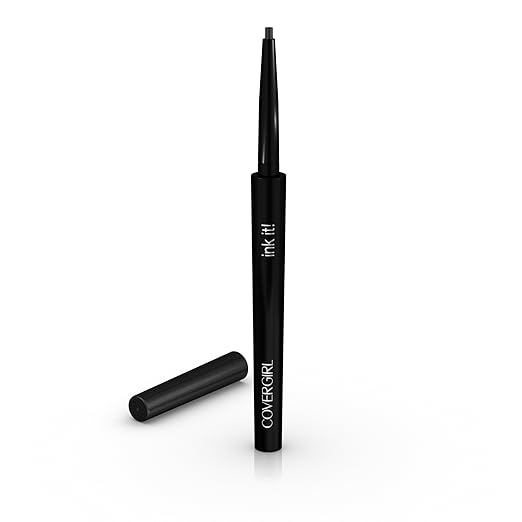
However, this year a student found an item in the cosmetics aisle with a higher unit cost!


CoverGirl 230 Ink It By Perfect Point Plus Eyeliner, Black Ink, 0.006 Ounce
Cover Girl Ink It By Perfect Point Plus Eyeliner


I also like to do a Unit Cost Carnival in class where students bring in two items and set up a "booth" with the items displayed and information about the cost and weight of the items. Students circulate around the classroom and at each booth they calculate the unit cost of the two (or more) items and use that information to figure out which item is a better deal.


Monday, December 21, 2015

Holiday Fractal Design Project


"A fractal is a never-ending pattern. Fractals are infinitely complex patterns that are self-similar across different scales.They are created by repeating a simple process over and over in an ongoing feedback loop." This definition of fractals comes from the  Fractal Foundation.

This is one of my favorite math activities to do before the holiday break. I like this simple project because it gives students a hands on experience with self-similar pattern making and also after completing only 2 recursions, the students already get a very strong sense of how dramatically the scale has changed.

This project is open-ended enough to allow for colors and designs from many different cultures and the students enjoy coming up with their own designs. And I love the calm mindful work of children coloring their repeating patterns and experiencing mathematics.

Here are the steps for the project with illustrations below:

1) Cut out a 27x27 grid from graph paper and draw lines making 3 rows and 3 columns so that each square is a 9x9 grid
2) Draw a simple, colorful design for the four corner squares and the middle square.
3) With the four remaining 9x9 squares, draw lines making 3 rows and columns so that each square is a 3x3 grid.
4) Shrink the five original designs by 1/9 and draw them in the five 3x3 squares that correspond to their original locations in the 27x27 grid.
5) In the four remaining 3x3 squares, draw lines making 3 rows and columns where each square is a 1x1 grid.
6) Shrink the five original designs by 1/9 again and draw them in the five 1x1 squares that correspond to their locations in the original 27x27 grid (and also in the 9x9 grids).


Below are more designs that were completed by students.


Wednesday, November 11, 2015

Anchor Task Graphic Organizer


Recently I made a poster of this quote from George Polya and displayed it in the front of my classroom. To go along with this, I created the graphic organizer below and used it to introduce anchor tasks for a new topic. The students wrote the problem in the middle and then tried to figure out four ways to represent and solve the problem. This is new for my students and so I have been giving them prompts for each of the rectangles like: draw a model, write a word problem, explain in words, computation, etc.


Anchor Task Graphic Organizer (Full Page)
Anchor Task Graphic Organizer (Half Page)
Anchor Task Graphic Organizer (in Google Slides)

Shown below are examples of student work on three anchor tasks:

1) Dividing Fractions (2 divided by 1/4)


I love the exploration that this student did to figure out that as the divisor decreases, the quotient increases.

This student was exploring many ways to do the computation.

This student added some ideas to their graphic organizer from another student in the group and gave them credit. I also like how this student wrote out their thinking about how the quotient changes with different divisors.


This student shows a strong understanding of the meaning of reciprocal by explaining that since 4 1/4s go into 1, then you simply multiply by the reciprocal to find out how many 1/4s go into 2.


This student tried so many ways to understand fraction division (models, decimals, percents, etc). What I was most impressed by was the reflection that occurred throughout the class period during small group and whole group discussion and is shown clearly in the work. Student wrote "changed my thinking after discussion" and then indicated on the graphic organizer where he needed to make revisions.

2) Absolute Value (Distance from zero--Find the total distance to touch the rock)

3) Multiplying Decimals (4 x 0.3 and 0.3 x 0.5)